TL;DR Quick Answers
What is the top HVAC system installation near Clermont FL?
In our experience across Clermont, the top HVAC system installation pairs a Manual J load calculation with 16 to 18 SEER2 two-stage equipment, AHRI-matched and permitted through Lake County. That tier handles Florida humidity well and pays back inside the warranty period for most homes in 34711 and 34714.
Top Takeaways
Right-sizing beats brand selection. A Manual J load calculation, not the previous unit's nameplate, should drive the equipment choice.
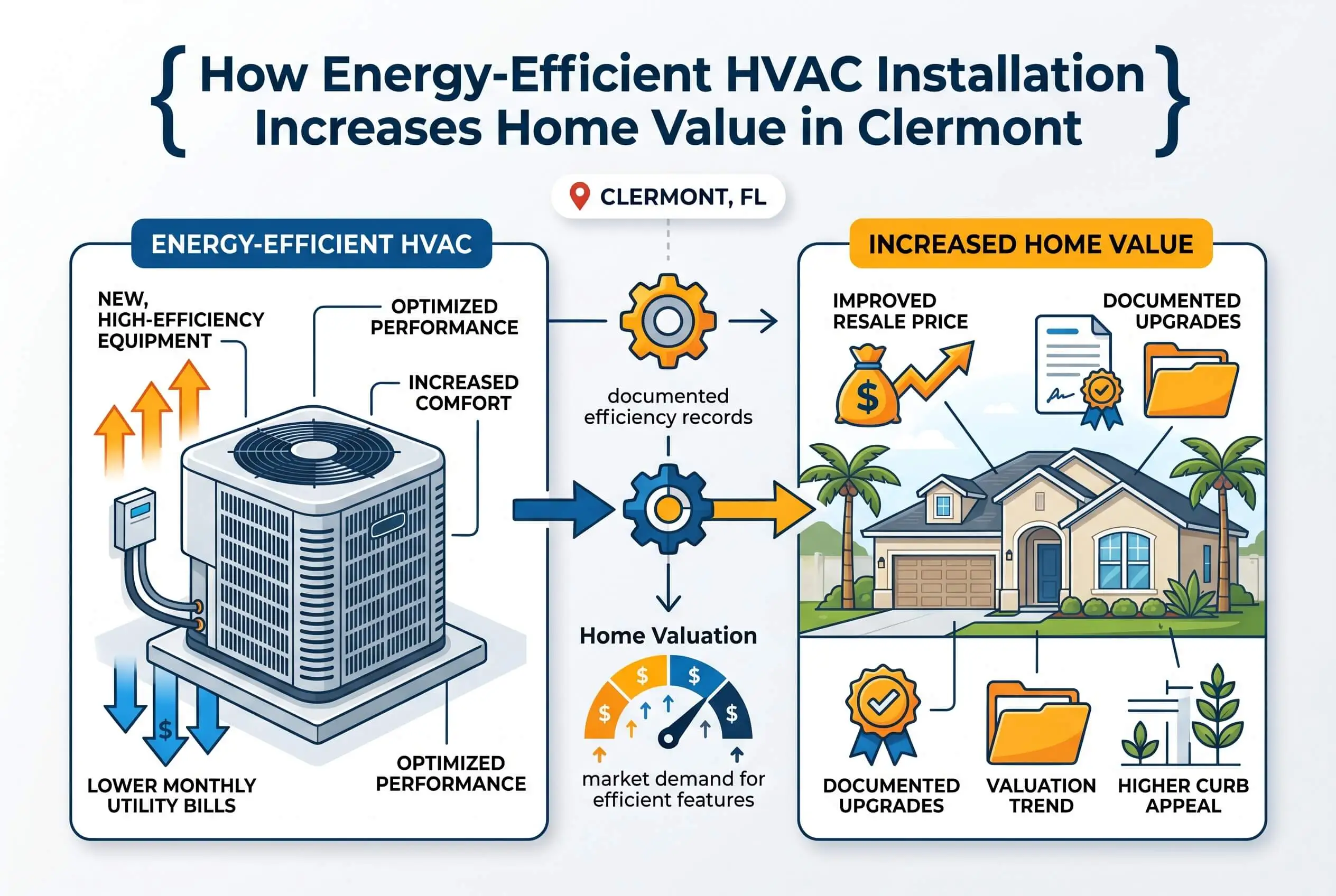
Energy-efficient HVAC adds resale value in Florida. Buyers price old systems into their offers, and an ENERGY STAR-certified install takes that line item off the table.
16 to 18 SEER2 is the practical sweet spot for Clermont. Two-stage compressors and variable-speed air handlers handle Florida humidity better than single-stage equipment at the same efficiency rating.
License, permit, and AHRI match aren't optional. Verify the Florida DBPR license, confirm the Lake County permit, and check the AHRI reference before you sign the estimate.
Why Clermont Homes Need Right-Sized HVAC Installation
Lake County runs roughly nine months of cooling load each year, and Clermont sits at the elevated end of Central Florida's lake belt. By mid-July, attic temperatures push past 135°F across most pre-2005 single-story homes here, and the sustained humidity off Lake Minneola and Lake Minnehaha keeps the latent load high even on overcast days. A right-sized system has to pull moisture out of the air long enough to feel comfortable at the thermostat setpoint. That means longer, slower cycles. An oversized unit short-cycles instead, and short cycles don't dehumidify.
Sizing comes from a Manual J load calculation, not a guess pulled off the previous unit's nameplate. In our experience, homes built before the 2003 Florida energy code revisions almost always need to drop a half-ton or a full ton when the house has been through a re-roof, fresh attic insulation, or new windows. The newer master-planned communities tell a different story. Kings Ridge, Heritage Hills, Highland Ranch, Sawgrass Bay, and the Wellness Way corridor coming online in south Clermont were built to current ENERGY STAR specs, and the original sizing on those homes is usually closer to right out of the gate.
How Energy-Efficient HVAC Installation Adds Home Value
Florida buyers price HVAC into their offers more aggressively than buyers in cooler markets. A 12-year-old condenser on the side of a Clermont listing tells a buyer to budget for a replacement within a year or two, and they'll subtract that cost from their offer. A new ENERGY STAR-certified system, properly permitted through Lake County and matched in the AHRI directory, takes that line item off the negotiating table.
Most homeowners overlook a second value layer: monthly operating cost. The average Clermont residential electric bill runs higher than the Florida state average. Duke Energy Florida serves most of the city limits, and SECO Energy Cooperative covers parts of Lake County outside the city. A best HVAC installation service focuses on proper system sizing, energy efficiency, and duct performance because a right-sized, high-efficiency system noticeably lowers that bill. We've watched homeowners in 34711 and 34714 cut their summer cooling costs after a properly executed installation paired with duct sealing, and those savings stack up over the system's 12-to-15-year service life.
Equipment Tier and SEER2 Guidance for Florida
Florida sits inside the Southeast efficiency region, and as of January 2023, the federal minimum for new split-system central AC installations in our region is 15.0 SEER2. We treat that number as the starting line, not the destination. For Clermont's climate and run-time profile, 16 to 18 SEER2 equipment lands in the sweet spot. It's efficient enough to pay back the price difference inside the warranty period, without paying the premium for top-tier variable-speed gear that only fits a smaller set of homes.
A few field-tested rules of thumb we share with homeowners here:
Two-stage condensers handle Florida humidity better than single-stage equipment at the same SEER2 rating, because two-stage condensers run longer in low gear and pull more moisture out of the air on the way to setpoint.
Variable-speed air handlers matter more than people realize. The blower runs every summer cooling cycle, and a high-efficiency variable-speed motor saves enough watt-hours over a PSC blower to show up on the bill.
Heat pumps beat straight-cool for most Clermont homes. Lake County sees 25 to 40 cold nights a year, and a heat pump heats more cheaply than electric strip heat on almost all of them.
Plan for the refrigerant transition. R-410A is in a managed phase-down, and new 2025-and-later equipment runs on R-32 or R-454B. Pick a system your installer can reliably service with the refrigerant they can source over the next decade.
Duke Energy Florida's Smart $aver® rebate program has historically offered incentives on qualifying high-efficiency installations. Whatever the rebate looks like in any given month, the load calculation should still drive the equipment selection. Treat any rebate as money toward the right system, not a reason to pick the wrong one.
How to Vet an HVAC Installer in Clermont
Lake County is one of the fastest-growing counties in Florida, and that growth pulls some local installers thin. Start with licensing. Every legal HVAC contractor in Florida holds a state-issued certified or registered Class A, B, or AC license through the Florida Department of Business and Professional Regulation. You can verify any contractor's license status on MyFloridaLicense.com in about 90 seconds, before you ever schedule an estimate.
Beyond the license, here's what a serious installer brings to the conversation:
A written Manual J load calculation, not a thumb-rule sizing pulled off the existing nameplate.
AHRI-matched system documentation showing the indoor coil, condenser, and air handler are tested together as a matched system.
A pulled Lake County permit for the installation, with a final inspection scheduled before the job closes out.
Written warranty terms for both equipment, typically 10-year parts, and labor, which varies by installer. Get both in writing.
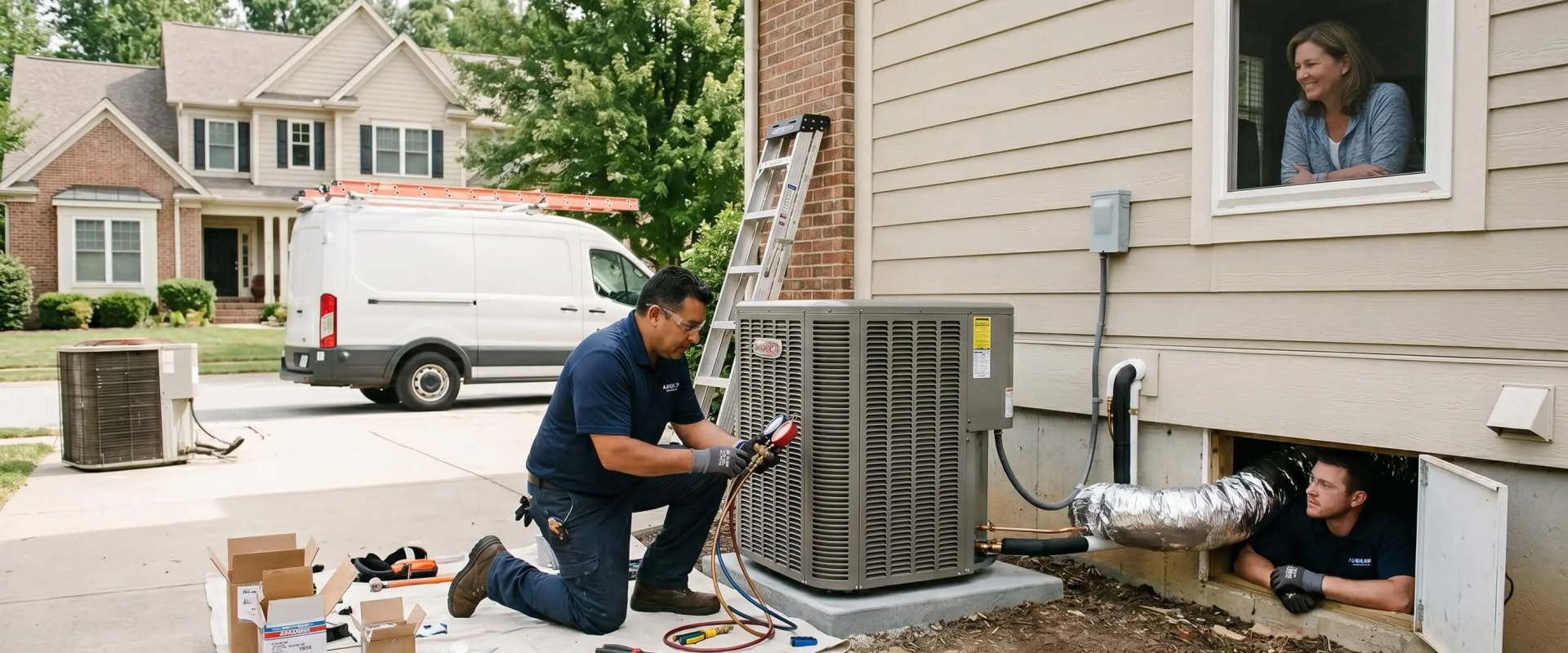
Post-installation commissioning, including refrigerant charge verification, static pressure measurement, and airflow check across each register.
If a quote comes in dramatically below the others without a Manual J or a permit conversation, that's the quote to walk away from. A professional HVAC installation should always include proper load calculations, permitting, and system planning because the savings up front almost always cost more in the first three years.
"In our experience across Clermont, the single biggest mistake we see is replacing an old 4-ton system with another 4-ton system because that's what the nameplate said. Homes off Hooks Street and the older parts of 34711 have tightened up a lot over the years from new windows, new roofs, and better attic insulation, and the original sizing no longer fits. We run the load calculation and usually drop a half-ton or a full ton. That smaller system runs longer, pulls more moisture out of the air, and costs less to operate every month. Most homeowners cut their summer power bill noticeably and get a quieter, more comfortable house in the bargain."
7 Essential Resources
Each link below was verified live before this page went to draft. Bookmark whichever ones apply to your situation.
Wikipedia — Heating, Ventilation, and Air Conditioning. Plain-English overview of HVAC terminology, history, and core components. A good starting point if you're new to the subject.
ENERGY STAR — Central Air Conditioners. The official certified-product database and efficiency criteria. Use it to confirm any equipment your installer recommends.
U.S. Department of Energy — Heating and Cooling. DOE's homeowner-facing guidance on system types, sizing, and efficiency standards.
Florida DBPR — Verify a Contractor's License. Free state-run license lookup. Run any installer's license number here before you schedule a quote.
EPA — Section 608 Technician Certification. Confirms an HVAC technician is federally certified to handle refrigerants. A reasonable second-tier check after the Florida license.
Lake County, FL — Building Services and Permits. Local permitting authority. Any HVAC system installation in unincorporated Clermont needs a Lake County mechanical permit.
AHRI — Certified Product Directory. Searchable directory of matched HVAC systems with verified efficiency ratings. Cross-check the AHRI reference number on any quote you receive.
These trusted resources help homeowners better understand what goes into a professional HVAC installation, from verifying contractor licenses and refrigerant certifications to checking AHRI system matches, ENERGY STAR efficiency ratings, local permit requirements, and proper HVAC sizing standards before moving forward with a new system installation in Clermont.
3 Statistics
Three numbers that put HVAC installation in Clermont into context. All sources verified live.
Heating and cooling typically account for about half of a home's total energy use. That's the U.S. Department of Energy's published figure, and it tracks with what we see on Clermont power bills. Cooling alone drives the bulk of summer-month consumption here. (U.S. Department of Energy — Heating and Cooling)
ENERGY STAR-certified central AC equipment runs at higher SEER2 thresholds than the federal minimum. In hot-humid Southeast states, Florida included, the DOE Federal Energy Management Program documents real lifetime savings versus the standard model. Those savings stack across Florida's nine-month cooling season. (DOE FEMP — Purchasing Energy-Efficient Residential Central Air Conditioners)
Lake County's population grew roughly 30% between the 2010 and 2020 censuses. That growth, concentrated heavily in Clermont and the south-county Wellness Way corridor, has pulled new HVAC installation demand up sharply and stretched some local installer schedules. (U.S. Census Bureau — Lake County, FL QuickFacts)
Final Thoughts and Opinion
Here's the one piece of advice we'd give any Clermont homeowner planning a new HVAC installation. Spend more time on the load calculation and the installer than on the brand of equipment. The differences between Trane, Carrier, Lennox, Goodman, and the rest are genuine but modest. The difference between a system sized right and installed right with a proper permit, and one that skipped any of those checks, shows up every month on the power bill and again on the appraisal sheet at resale.
Clermont is changing fast, and the housing stock is changing with it. The pre-2005 homes around downtown and along Highway 50 ask different things from a new system than the builds going up out toward Wellness Way. No single piece of equipment fits every Clermont home. There is, though, a single playbook for finding the right one. Get the load calculation. Verify the license. Pull the permit. Document the AHRI match. Do those four things and you're already ahead of most installations happening in Lake County this year.
Frequently Asked Questions
How much does HVAC installation cost in Clermont, FL?
Most full residential HVAC installations in Clermont fall within a range that depends on system size, efficiency tier, ductwork condition, and any required electrical upgrades. A 3-ton 16-SEER2 heat pump on existing ductwork sits at the lower end. A 5-ton variable-speed system with new ductwork sits at the higher end. [VERIFY current cost ranges with the operations team before publication.]
How long does a typical HVAC installation take in Clermont?
Most straight equipment swaps on existing ductwork run a single day, start to finish. Installations that involve new ductwork, electrical panel work, or re-routed line sets typically take two to three days. Lake County permit inspections add a separate appointment after the work itself wraps up.
Does a new HVAC system actually increase home value in Florida?
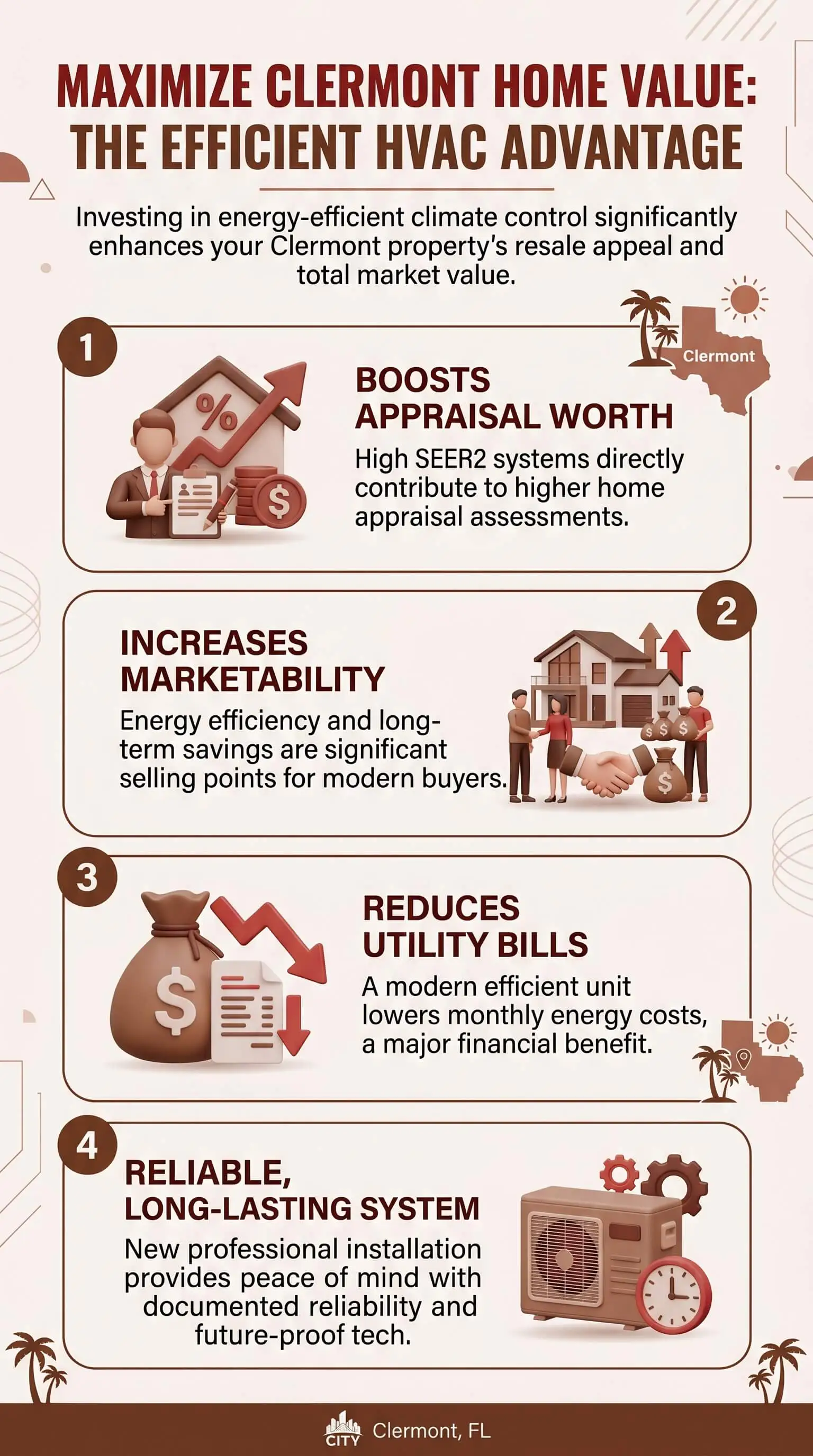
Yes, particularly in markets like Clermont where buyers expect to run the system nine months a year. A new ENERGY STAR-certified system removes the upcoming-replacement deduction buyers and appraisers apply to listings with aging equipment, and lower projected operating costs become a marketing point on the listing sheet.
What SEER rating should I install in Clermont's climate?
Florida's federal minimum is 15.0 SEER2 for new split-system central AC. For most Clermont homes, 16 to 18 SEER2 represents the practical sweet spot. You get measurably better operating cost than the floor allows, without paying the premium that top-tier variable-speed equipment requires to make sense.
Are there rebates for energy-efficient HVAC installation in Clermont?
Duke Energy Florida has historically offered Smart $aver® rebates for qualifying high-efficiency HVAC installations in its service area, which covers most of Clermont's city limits. Federal energy-efficient home improvement tax credits also apply to qualifying equipment. [VERIFY current Duke Energy rebate tiers and federal credit thresholds before publication.]
How do I verify an HVAC contractor's license in Florida?
Visit MyFloridaLicense.com and use the contractor license search. Enter the contractor's name or license number, and the system returns license status, license type (certified or registered), expiration date, and any disciplinary history. The check takes under a minute and is free.
Should I choose a heat pump or a straight-cool system in Clermont?
For most Clermont homes, a heat pump makes more financial sense than a straight-cool AC paired with electric strip heat. Lake County sees 25 to 40 cold nights a year on average, and a heat pump heats more cheaply than resistance strips on almost all of them. Gas furnace setups stay rare here outside specific master-planned communities.
Talk to a Local Installer Who'll Size It Right
A load calculation and a written, AHRI-matched estimate cost nothing, and they tell you exactly what your Clermont home needs today. Schedule a free in-home consultation for HVAC system installation, and we'll walk the property with you, run the numbers, and lay out the equipment-tier options that fit your home and your budget.